Saturday, December 5, 2020

The debate of net neutrality is back


The debate of net neutrality never gets old. Actually it is time to raise that topic again now that Joe Biden will take office in January. Trump threw out Obama-era’s neutrality rules and now Democrats are getting ready to take back Federal Communications Commission (FCC) to reinstate those rules. 


So what is net neutrality? Without net neutrality, broadband companies become the gatekeepers of internet. They could block people’s access to certain websites or apps or slow down the internet, and then charge consumers additional fees to speed up the internet. More subtlety, they could also prioritize people getting access faster to their own content and slow down the internet for competitors’ content. For example, if you were using AT&T network, you might find that watching HBO Max is smooth and HD and watching Peacocktv is slow, because AT&T owns Time Warner, who owns HBO, and Peacocktv is owned by NBC Universal, which is owned by AT&T’s competitor Comcast.


With the new administration, FCC will reinstate net neutrality protections and take some power off broadband companies’ hands. It will likely be met with lawsuits, but federal courts have always been on FCC’s side. However, we will have to wait for the Senate elections to be over and see if the Democrats will take over the Senate. Otherwise, this fight will go on and on.

Why sport and gaming are a powerful combination for consumers?

November 2020

Marketingweek.com


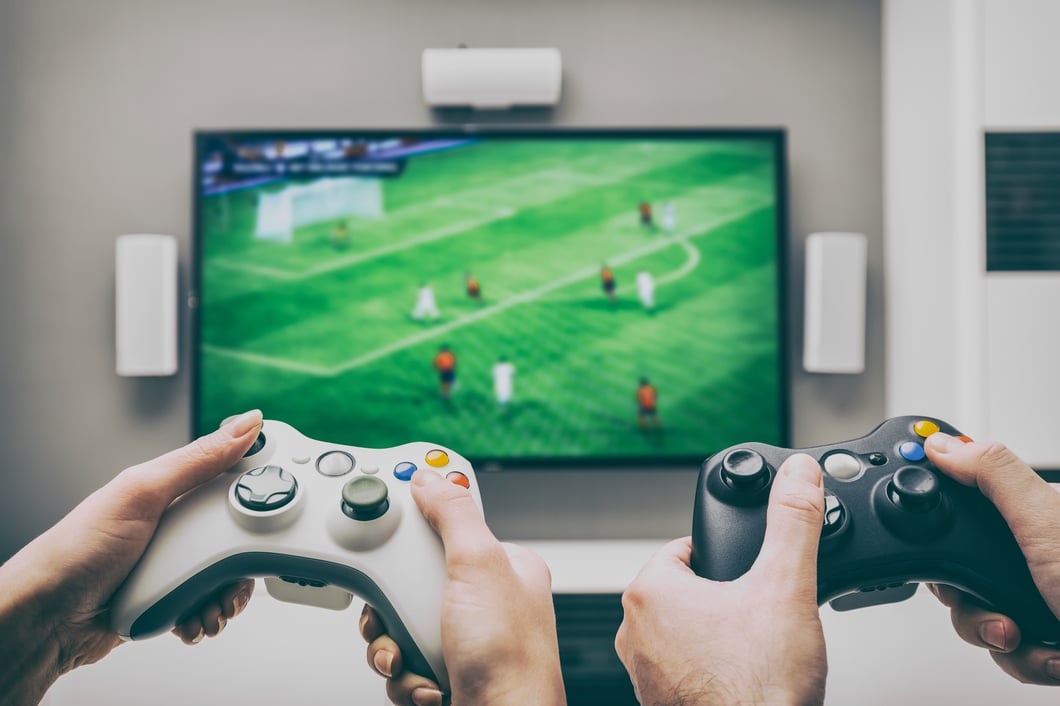
There has been a rise in the consumption of both sports and video games videos online through platforms like YouTube. Marketers have noticed this behavioral trend and sees valuable marketing opportunities. Games such as FIFA, Madden NFL, and Pro Evolution Soccer have a global popularity selling over 100 million copies through their lifetime. And most recently, gaming has become a spectator sport with eSports being established. This market is valued at over $950 million in 2020 and projected to grow to $1.6 billion by 2023. 

This creates the opportunity for brands to market towards engaged consumers consuming sports and video game content on YouTube. With sports, people like to watch the highlights, live streams, behind the scenes content with their favorite athlete. With gaming, people like to watch YouTube creators play, discuss, and review video games.

Brands understand that there is a great opportunity to market towards sports and gaming enthusiasts on YouTube. Between June 2019 and June 2020, time spent by consumers watching rugby increased by 100%, golf by 120%, and cycling by 70% in the UK.

Sky Sports marketing director Robbie Balfour says that YouTube allows them to broadcast their online content to create a story through advertising and retargeting for future conversions. The brand times its YouTube campaigns to the start of an important sports event such as a new football season or Formula One to initiate their action to become a customer of their TV sports channel and live streaming online.

Watching gaming content is gaining broad popularity with Goldman Sachs forecasting eSports will reach the same number of viewing audience 300 million as the NFL by 2022. In 2019, there has been more than 35 million channels that uploaded a gaming video on YouTube. And 55,000 new channels that uploaded at least one gaming video saw subscribers exceed 100,000 during the same time. Gaming content is driving this growth in channels and brands. Consumers not only want to consume content but also follow commentary and reviews of professional gamers. This is great news for marketers who now have access to an engaged audience that is looking for a total experience.

Gifting in the Age of Coronavirus

 Given it seems that Coronavirus is here to stay at least until the first half of next year, it looks like we are in for a socially distance holiday season.  As part of the new norm to minimize contact, the landscape of gift giving has also evolved.  On one had people will be looking for gifts that can be shared remotely, for instance the classic online gift card.  In fact, gift card sales are already booming with growth of over 100% versus same sales this quarter last year according to Digital Commerce.  Additionally there is some thought that not only will e-gift cards boom in sales, but also contactless or even mobile gift cards to minimize the amount of required contact if used in store.

While on one had many people are gifting in a way to minimize contact, the months of social distancing is increasing many people's desire for closeness and connection.  The forced isolation has been very stressful for people, especially individuals living on their own and this feeling will likely only be exacerbated during the holiday season.  With that in mind, there are many suggestions for gifts to help overcome that feeling of loneliness and sadness while still respecting social distancing:

Some fun ideas from Business Insider

Some advice on sending from Fortune

Some personalized gift ideas from Shutterfly

Some Coronavirus care packages from Brilliantgifts

Some ideas for employees working from home from Reading Eagle

Some gift ideas for essential workers from USA Today

Some pick-me-up gift ideas from Newsweek

This should give you a great starting point for planning your holiday gift lists this year!  Wishing everyone a happy and safe holiday season.

By Friends, for Friends: The Holiday Gift Guide!

The holidays are quickly approaching and I have a handful of amazingly talented friends who's companies have some serious gifting potential. Not to mention, you would be supporting female-founded, female-led, small businesses - what's not to love!


Puzzles worth framing

From the Founder: 5 years ago, I was working around the clock at an early startup and fell in love with jigsaw puzzles as my nightly meditation. I was doing one every week and the stress relief was great, but the designs were outdated and well, lame. I started dreaming up a puzzle that would be beautiful for both the doing and the decorating, that would look good before, during and after completion. I knew I wanted to support and highlight the work of amazing female artists and after a year of curating the art and reimagining and designing the packaging, JIGGY was born. I hope JIGGY inspires you to unplug and experience art in a whole new way, in pieces. -Kaylin Marcotte


Gift Suggestions: Anything from the new holiday collection!
Price Range: $40++
www.jiggypuzzles.com | @jiggypuzzles

Ritual-focused Hair Care

From The Founder: When I started Crown Affair, I wanted to create high quality haircare rooted in ritual. For me, haircare is a daily practice, a part of being well and caring for myself. But after years of conversations, I realized it was much more frustrating than relaxing for so many people in my life. So I decided to create a new kind of haircare brand—one with clean ingredients, effective formulations, and beautiful handmade tools you’ll look forward to using every day. Crown Affair is a love letter to those who seek to change their relationship with their hair, appreciate its natural beauty, and, most importantly, take care. -Dianna Cohen

Gift Suggestions: The Comb 001, The Towel, The Scrunchie (life changing)
Price Range: $15++
www.crownaffair.com | @crownaffair

CBD-based wellness and skincare

From the Founder: I began to see life differently in 2012 when my husband was diagnosed with glioblastoma brain cancer. The zeal and vigor to shine in the midst of impediments, the ability to find peace in the unknown, the intuition to live with endless purpose, became my life mission. Mowellens was founded on the principles of unparalleled quality, efficacy, and purpose. Infusing these principles into our ethos requires a commitment and dedication to cultivating hemp for a better planet, supreme sourcing standards for interconnectedness, innovation in a burgeoning industry, and formulations for regeneration, repair, and perspective. We are passionate about creating skin and health rituals to give you confidence and trust, believing in the purpose behind the product. I believe feeling better and becoming a better version of you can be achieved with ease. And I hope Mowellens helps you find ease in the effort it takes to get there. - Amy Duncan

Gift Suggestions: Inner Peace, Radiant Scrub, One For All
Price Range: $50++
www.mowellens.com | @mowellens


Clean Remedies to keep you healthy and happy this winter

From the Founder: Your medicine cabinet should be filled with remedies that you can rely on. I want you to have access to solutions that are clean, potent, affordable, and a friend to the environment—that are absolutely free of the additives, refined sugars, and side effects that slow us down. Beekeeper's Naturals' mission is to break down the system, to restore your trust in your remedies, and to redefine what goes into the medicine cabinet. After all, healthy should be your natural state of being. When your body is supported and you feel your best, there's nothing to stop you from living life to the fullest, reaching new heights, and changing the world. - Carly Stein

Gift Suggestions: Hive Pharmacy Travel Kit, Honey Flight, Immune Support Essentials
Price Range: $15++
www.beekeepersnaturals.com | @beekeepers_naturals

The Rise of "Community" In Venture Capital

Platform or "Community" is a relatively new function that serves to improve a VC firm’s offering to portfolio companies. Over the last 15 years Union Square Ventures (est. 2003), First Round Capital (2004) and Andreessen Horowitz (2009) – have differentiated themselves by providing more systematic, tangible value-add through (i) network-harnessing platforms, and (ii) significant portfolio support staff, which both theoretically add value post-close and make their VC firms more attractive to founders. In short, VC firms now believe that in today’s crowded venture capital landscape, it’s the value-add that really makes the difference in winning deals.


The platform role is not uniform across funds. Rather, a Director of Platform will have a different focus depending on the philosophy, priorities, and size of their fund and the needs of their portfolio. Some are strong on content, some on talent. Some rule the event space, and some focus solely on community building. Some wear lots of hats and are spread across a half dozen different areas, acting as a swiss army knife for fund operations and portfolio company network management.


More so, Director’s of Platform / Community greatly struggled with KPIS and measurement of their effectiveness. 


To get a clear answer I contacted the VC Platform Community - a membership community of about 200 Heads of Platforms in Venture. As it turns out, they did not have distinct answers to my questions on the role and metrics for performance. As such, I compiled my research from my calls, meetings and readings and this is what I surmised of the role:

Responsibilities: 


  • Focuses: events, marketing, and new initiatives

    • inclusive of operations, business development, community, content and communications, event planning, talent support. 

  • Manifested in the following ways:

    • Business Development (by making strategic connections to customers, partners, and acquirers)

    • Talent (we’ve strategically sourced hundreds of people for our portfolio companies, dozens of which have been hired)

    • Communications (assisting with strategic messaging and PR)

    • Events (like a CEO Summit; quarterly workshops for all CTOs, product, marketing, people ops, and ops teams; curated events with Fortune 500s, and one-off portfolio-wide events like a celebration of International Women’s Day)

    • Portfolio Company Community (a network to share talent, best practices, and resources – with a curated resource database, along with a hundreds-strong Slack team open to any employee at any company)


Size Matters:

  • Director of Platform is a role that’s constantly evolving based on size, stage and maturity of the companies across our two funds. A CEO of a 200-person company that’s raised $50M, for instance, will need help with different initiatives than a CEO of a 10-person company that’s raised $1M. At 64 companies strong, there’s enough critical mass among our portfolio company marketers, technical teams, people ops professionals, product managers, and others to easily find an answer to a question, or to be pointed in the right direction.


KPIS are Confusing:

  • “Platform” can be boiled down to this: how do we connect the companies we invest in to our network, or to a network we can access? We keep two end goals in mind: help our companies be successful, and enhance deal flow. Like venture itself, it’s a long-term play with a lot of little wins along the way.

  • Dan Kozikowski @ FirstMark Capital has found that “qualitative feedback and measuring what you can control, are the best ways to buy social capital with the team and LPs, too.” The consensus shared was that measuring activities such as introductions made to talent and/or corporates, portfolio coverage / attendance at events, the number of successful introductions made to follow-on investors and deals closed off the back of a meeting with the platform team are good data points to work with.


In Conclusion:

  • The logic of the VC platform model in the context of the overall firm functions as follows: 1) The firm makes investments in post-investment resources or support staff (in red below); 2) these investments then lead to a 2-sided positive feedback loop, in which these resources may lead companies to perform better (IMPACT 2) and also generate better deal flow as a result of the firm’s enhanced brand reputation for supporting founders (IMPACT 1). These feedback loops directly and indirectly improve fund performance, and so the positive feedback loop goes on


Friday, December 4, 2020

The challenge of the New York Strand Bookstore in E-Commerce era

The growth and acceptance of buying physical items online has give the offline shopping a great pressure and challenge, especially during the recent pandemic period.

As we all know, it becomes very popular to buy cloths online. But It was very rare if you heard someone bought vegetable and meat online before. However, nowadays such type of shopping also becomes very popular.

The offline business becomes more and more challenges due to the drastic growth of E-commerce platform.

One of the areas that was hurt badly is probably the bookstore business.

Recently, The Strand Bookstore, a landmark of literarNew York, is in serious trouble, appealing for customers to help it stave off closure amid the coronavirus pandemic.

Founded in 1927, the Strand Bookstore has survived for 93 years over the Great Depression, two world wars, big box bookstores, ebooks and online behemoths. The Strand Bookstore are the last of the 48 bookstores still standing from 4th Avenue’s famous Book Row but now is struggling of business continuations.

Well, given the invention of the vaccine, the coronavirus may be well controlled soon, but does it mean that the offline business such as Strand Bookstore would turn around to continues its prosperity of the old days? What is the future of the online store given the rapid growth of E-commerce? Is it possible that the offline shopping would eventually be disappeared?


Snapchat and AR based Advertising

Snapchat recently announced additional features to its Snap Camera. For example, you can now scan plants, dogs and different products with the Snap camera function to identify plants, dog breeds or get additional product information.

Snapcodes have been around for a couple of years but the new features allow users to get more information on certain products such as nutrition or customer reviews if you scan wines for example.

Snapchat also has partnered with McDonalds and Coca Cola that gives users promotions by scanning the logo.


Snapchat also has a partnership with Amazon that allows users to scan an image or snap a photo of a product that can be purchased through Amazon.

These new features are another step towards the next stage of AR and the integration of emerging marketing trends into social media platforms. It would be interesting to see if the scanning tool will be combined with a payment feature in the future that allows shoppers to check out a product in store through the Snap app directly.  This would be a very powerful tool allowing Snap to tailor ads to users based on their shopping interest and shop location.

A nudge to be nicer

 This week, YouTube rolled out a new feature that aims to combat hurtful and inappropriate comments on users’ video channels. This change follows a year during which the social media giant has been heavily criticized for failing to reign in hate speech and misinformation on its platform. 


Based on what content gets repeatedly flagged by users, YoutTube’s AI-powered systems will learn what’s considered offensive. This feature will improve over time, as the technology gets better at detection and the system itself is further developed.

When the system detects that a user is about to post something offensive, it will send out a warning to “Keep comments respectful” and prompt users to check the site’s Community Guidelines if they’re not sure if a comment is appropriate. The user then has the option to edit the comment or “post anyway.”

These intentional pauses are designed to stop users from reacting impulsively, and instead nudge them to be more thoughtful in what they write in commenting sections. In the past, platforms have been hesitant to implement such measures as they can reduce user engagement. However, social media companies have been under pressure to combat hate speech and make their platforms a more respectful environment. 


Reddit shares a glimpse behind the curtain, revealing a super-powered base

 Reddit recently, for the first time ever, revealed its daily user count and growth vs. YAG. They shared the info with good reason, too: 52MM daily users (a 44% increase vs. YAG), is quite the flex. While not even going close to toe-to-toe with Facebook's goliath numbers, their public share is revealing. Reddit is making the mainstream push.

Is this an effort to woo advertisers? Certainly if I were considering a Reddit campaign I would want to know the available reach. Others have dabbled in advertising and found Reddit's userbase to require extra consideration. Reddit has done well for itself so far, not disclosing profitability but showing strong revenues. I expect that this transparency is part of a push to encourage additional ad spending, helping break even if they have not done so, already.

Does this mean Reddit is growing responsibly, or are they flailing in the deep end looking for a lifeline? One blogger suggests that advertising on Reddit is challenging, and the base does not engage with adverts much at all. Organic posts on Reddit seem to fare better, likely because users don't immediately realize they are being advertised to.

Maybe while Reddit is a good way to engage with fans of your brand or increase awareness through a well-designed engagement strategy, inorganic advertising has some kinks to be worked out.

 Spotify Wrapped: 2020 Edition


This year's Spotify Wrapped was released on December 1. As every year, it provided a highly personalized summary of each user's listening history and behavioral patterns on the app, packaged in the form of stories 

The personalized experience, available on the apps, was different this year in that is included fun quizzes that put listeners to the test, asking questions about their top podcasts, artists and decades of music.

Titled as "One song helped you get through it all" (referring to the disastrous 2020), the streaming service also summarized the "Story of Your 2020 with your Top Song" by showcasing the dates the users streamed their songs for the first time, up to the days with the most streams.

As per usual, Spotify also curated personalized "Your Top Songs 2020" playlists with the users' top 100 songs of the year; as a bonus surprise, Spotify also created a "Missed Hits" discovery playlist with another 100 songs that the users might have missed this year but can continue to listen to.

Every year, Spotify delivers highly relevant data insights packaged as fun facts customized to each user individually, representing it in a fun and playful way. Interestingly enough, while one would expect there to be privacy concerns about Spotify's extensive use of data from user behavior patterns on the platform, the truth is, the streaming service provides significant value to its users, making the exchange between their data and data use less concerning and more enjoyable.

Spotify also experimented with a new format this year -- stories -- that they are planning on releasing in the future. This is yet another company introducing the stories format, followed by Twitter and LinkedIn.

Thursday, December 3, 2020

Can AI-powered ads be more creative?

 In an era when artificial intelligence can play chess to defeat international masters, artificial intelligence's "creative" work, especially advertising creativity, has always been considered potentially a disruptor for the digital advertising world. 

AI has been utilized in advertising for quite some time. The combination of artificial intelligence and digital advertising has long been around. In terms of precision advertising, artificial intelligence provides powerful technical support for accurate reach of advertising users. Recently, the continuous development of artificial intelligence has provided a greater development space for mobile advertising-creative design and customization of advertising.

For example, Google's BERT technology can process one word in the context of all other terms in a sentence, rather than one after another. BERT also enables anyone to train their latest question answering system. The customization of search results and result pages based on the learning of the user's past interactions and preferences is another application of machine learning used in search.  Many advertising technology companies have been committed to using AI and machine learning to find suitable audiences to write better ads than humans and to increase conversion rates and interactions with target audiences. There are also some AI-led developments in creating dynamic advertisements and landing pages to personalize marketing messages in real-time. AI has certain applications in content creation. It can use technologies such as natural language generation (NLG) to determine the logic of individualization and manage individual-specific content. According to the goals set by advertisers, Google uses various contextual signals (through search data) to predict user behavior and influence bidding. Facebook also incorporated machine learning into the planning and execution of campaigns, as well as ad placement and ad placement. Similarly, in terms of natural search, the machine learning-based product ALPS reverse-engineered Google's ranking algorithm, and can accurately quantify ranking drivers, provide accurate suggestions for changes, and predict the effects of SEO measures before they are implemented.

Artificial intelligence brings more possibilities for advertising innovation. And novel advertising forms can increase the interest of advertising, attract users, and bring higher conversions. Advertising forms have been continuously innovated since their development, including rich advertising forms such as incentive videos, native information stream videos, and native advertisements. The personalized presentation of mobile advertising can optimize advertising effects. At present, many mobile third-parties use specialized mobile advertising creative design teams to design more creative advertisements using artificial intelligence technology. For example, Mobvista has established a creative laboratory dedicated to digital advertising. It designs and develops new advertising ideas for various advertising formats, including Playable, Interactive Endcard, AR/VR, panoramic, etc., and then combines cutting-edge algorithm frameworks for interactive materials Automated generation and production. Through the innovative system of advertising combined with AI technology, it can bring the ultimate interactive experience to users, and achieve a win-win situation for advertisers, delivery platforms, and traffic.

At the same time, artificial intelligence is also a hotbed of customized and personalized advertising. Big data is the foundation of artificial intelligence. Based on user portraits generated by big data, artificial intelligence can help advertisers identify consumers or potential consumers, quickly analyze and decide what users need, and design more personalized advertisements. And how to deliver and display with the material creation that can most touch the user's mind, which includes multi-dimensional and multi-level optimization work: the generation of personalized advertising templates, the dynamic filling of personalized materials, and the optimal combination of presentation. In the future, with the assistance of artificial intelligence, companies no longer need to rely on lifeless surface data to "guess" the response of the consumer market and can customize unique advertising experiences according to consumers' preferences and needs.

AI certainly brings better technical capabilities to digital advertising. Only when technology is used as a tool to serve creativity can the best publicity effect be achieved.

Tuesday, December 1, 2020

The rise of retail media networks calls for standardization


Amazon is challenging Facebook and Googles dominance in the advertising space, primarily becuase of its consumer spending data.  Retailers are all seeking to capitalize on their understanding of their customers.  Walmart recently announced an a platform to allow marketers to buy sponsor product placements.  The value of offline purchase data is much greater than the programmatic assumptions of the past decade.  This could lead to a much more fragmented market for the advertising industry. 

https://www.marketingdive.com/news/the-rise-of-retail-media-networks-calls-for-standardization/589413/


Ad spend retraction due to COVID-19 worse than expected: WARC


Global ad spending is expected to fall by over $50bn due to COVID and is expected to take over two years to recover to pre COVID levels of spending, which is twice the drop experienced in the '07/'08 financial crisis.  The drop is primarily driven by the auto, retail, and travel sector, which have been hit particularly hard by the pandemic.  However, much of this decline is attributable to traditional marketing.  Online marketing by contrast, which accounts for half of spend, is flat year over year.  The only sub category that should experience growth is online video.  This isn't all that surprising but further reinforces the idea that the pandemic has imply accelerated trends that were already in motion.  

https://www.marketingdive.com/news/ad-spendings-retraction-because-of-covid-19-is-worse-than-expected-warc-s/589870/

Monday, November 30, 2020

What Facebook's Acquisition of Kustomer means for the future of Social Commerce


Facebooks $1 billion dollar acquisition of CRM platform Kustomer is a strong single at how Facebook views the future of its own platform.  Customers aren't concerned with the particular channel, as much as they are about getting brands to respond to them.  Incorporating Kustomer's technology with Facebook is a move toward onmi-channel communication for companies with customers regardless of the particular channel the customer reaches out.  If small companies are able to focus their efforts on a single platform but reach customers wherever they are across the internet, it will be a boost to Facebook.  They will become the defacto platform for any business looking to extend their reach.  Beyond the advertising channel, they will become the platform that small to medium companies may begin to run their entire marketing departments.

This purchase, as well, helps to provide context for the Salesforce acquisition of Slack.  Although not directly comparable, enough similarities to see the way companies are viewing the importance of having CRM capabilities built into the social platforms companies are using to understand how to effectively target customers on the web.  Facebook acquired WhatsApp and has made moves to utilize the app to make transactions easier for businesses.  

Salesforce can see these moves by Facebook to transition into the business software business as a threat. Facebook's previous acquisitions have traditionally been with the intent to provide additional features for its users.  These moves single that software companies catering to the business should beware of the tech giants which are responding to the way customers have embraced social media, and its ability to conduct commerce. 

Source: 

https://www.wsj.com/articles/facebook-nears-purchase-of-startup-in-deal-that-values-it-at-1-billion-11606750196

https://techcrunch.com/2020/11/30/facebook-confirms-it-has-acquired-kustomer-sources-say-for-1b/


Wednesday, November 25, 2020

 Tweets vs. Fleets?

Twitter recently introduced a new content format -- "Fleets" -- that eerily (strategically?) resembles the "stories" format that Snapchat spearheaded and Instagram so skillfully copied.

According to Twitter, the new format aims to create a more active and safer space for users to express themselves and participate -- especially for those who were "intimidated" by the open and public nature of tweeting in the traditional way.

This is also a strategy to engage the silent "lurkers" on Twitter -- there is a trend of users who prefer to consume content from the more active users, but don't usually contribute to the discussions themselves. A lot of users prefer to passively read tweets and are scared to contribute because of the risk of getting "flamed" publicly.

So essentially, what Twitter is doing is taking the pressure off of the users by making their contributions more transient and "fleeting," lowering the barrier of entry even for the most easily intimidated users.

Whether users really need this feature, only time will show. The truth is, if people did have the intention to make something permanent as part of the "cancel culture," they still have the option to take a screenshot of the "fleet" and share it through permanent tweets instead.

But ultimately, it's up to the users to use -- or abandon -- the feature.


Monday, November 23, 2020

Will AR dominate our next decade?

 Smart phone, especially iPhone, defines the decade of 2010-2020. “Mobile first” become the motto of most tech companies. What will the next thing that will define the next decade? Apple again, might have the answer for us – AR. 


AR made its debut to mainstream users with a hit game Pokemon Go, as well as other furniture apps. While other big techs all have been actively exploring goggles and glasses for AR, every new iPhone 12 Pro has a depth-sensing lidar sensor that can do advanced 3D-scanning for a depth map as well as more AR capabilities. Apple is keen on making AR work with what everyone already has – their phone than another extra device. However, we predict that one killer app is needed to kick off the AR in mass consumers. Right now, there are more than 10,000 iOS apps that use AR, that helps people to live their lives better. COVID also accelerated the trend for AR adaptation by forcing many of the physical stores to close. Furniture and home improvement has been the first to try out AR, and Home Depot data showed that people are more like to buy if they use the AR. Art exhibition can also use the location information to “install” art wherever they would like.

Amazon launches Online Pharmacy


This week, Amazon announced its launch of Amazon Pharmacy, an online and mobile prescription medication ordering service. This move comes a little over two years after its acquisition of Pillpack for $753 million. 

The company said its online pharmacy will offer commonly prescribed medications in the U.S. After setting up a profile, users can have their doctors sent prescriptions directly to Amazon.  

Continuing its ambition to become a one-stop-shop for medicine and wellness, Amazon’s push into the pharmacy business has sent shares of giant drugstore chains such as CVS and Walgreens plummeting. However, industry experts expect the move to mostly affect smaller drugstores that don’t have the purchasing power of retail giants or deals with insurers.

With a track record of disruption in several industries (i.e. booksellers, supermarkets, shipping companies), Amazon’s impact on the pharmacy business will be profound. 


Saturday, November 21, 2020

The Future of Black Friday Shopping

This year will be a very different holiday shopping experience. There is no doubt that online shopping will increase this holiday season as we continue to socially distance. Amazon and other e-retailers will be well positioned to benefit from the holiday shopping activity as in store events might even be cancelled or are shifting online as stores do not want to attract large crowd. Target, Kohl's, and Walmart have already decided to keep their doors closed.

This holiday season may just be the first push to a quite different Black Friday shopping of the future.

Here are a few things that will make holiday shopping a different experience this year and may even stay.

  • Curbside pickup has become popular not just for restaurants during the pandemic and is likely going to stay. It will take a while until we get comfortable using mass transportation and customers with a car will continue run errands using curbside pickup. Curbside pickup may be a way for brick and mortar retailers to stay relevant and claim a share of sales otherwise moving to online retailer. (https://blackfriday.com/news/stores-with-curbside-pickup)
  • Black Friday won’t be just on Friday this year. It’s more like a month as retailers are trying to lure shoppers to make purchases. Deals might be even better and available online this year as customers have been to lure more shoppers. 
  • QR Codes have gained popularity to receive special offers or updates by scanning a QR code in a  magazine or store front. The Black Friday of the future will probably turn toward tech to make this a more immersive experience such as AR ad circulars where you can scan QR codes and see special deals and product information on your phone.
  • Amazon has some exclusive offers just for Amazon Alexa (https://www.smartenlight.com/alexa-what-are-my-deals/) to get customers to use voice enabled shopping
It will surely be an interesting holiday season for the retail industry.

Are AdBlockers ethical?

"Ad blocking" is a kind of software, usually in the form of a browser plug-in, but now it is more of a mobile application. They prevent advertisements from appearing when you browse the web or App.

Most people using Chrome or Firefox browsers have AdBlocker turned on by default. While many websites have come up with ways to get around that, AdBlocker and similar extensions are effectively reducing the reach of advertisers, especially on 3-party websites. However, is this behavior ethical?

According to the latest report from PageFair, the well-known adblocking plugin Adblock has a huge impact on website traffic and revenue. PageFair's report stated that Adblock has hidden costs. It not only reduces the revenue of small and medium-sized websites, but it also reduces traffic. For every 1% increase in the total website traffic filtered by Adblock, the website traffic of small and medium-sized websites drops by 0.67%. Filtering ads by Adblock usually results in a temporary increase in traffic on the site. This short-term effect is because Adblock users can enjoy the site without advertising. In the past three years, the traffic level of most websites with high Adblock filtering rate has been significantly lower than other websites. Thanks to Adblock, the traffic of the 2,574 websites in the study dropped by an average of 8% in 35 months.

Those who oppose ad blocking usually focus on its potential threat to the Internet economy. Advertising is the mainstream business model on the Internet. Therefore, if everyone uses ad-blocking software, will the Internet lose its appeal and crash? If you can't see the advertisement, then, isn't the service you are using now a truly free product? When using ad blocking software, have you violated your agreement with the network service provider? Is ad blocking an "obvious robbery" as described by AdAge?

In response to these doubts, proponents of ad-blocking often point out that most ads are "annoying" and blocking can make them better. In addition, users who block advertisements would never buy the goods in the advertisements. Many users also object to advertisers tracking their browsing data and online behavior. Some people block ads because they want pages to load faster or reduce overall data usage.

It is reported that AdBlocker now not only intercepts advertisements but also charges these advertisers, it has become a guard for Internet portals. It has made strict criteria for these advertisements, and only allows acceptable advertisements to enter. Let advertisers purchase the permission to display "acceptable" ads so that even users who have installed ad-blocking can see these ads.

Whether ad blocking software is infringing or not, there is no sound answer yet. This debate is still ongoing. At the same time as consumers of advertisements and websites, we can think about the meaning of pop-up advertisements: you can use the browser for free, you can retrieve any information you want to find, and you can see the latest and most popular high-quality videos for free. Some people get used to using news for free but ignore the production of these websites, and maintenance also requires a lot of energy and financial resources. If these sites charge you, how much do you have to pay? If fees are charged, does it violate the original intention of the "Internet" for interconnection? If the advertising business of technology companies such as Google, Facebook, Apple, Tencent, and Alibaba is banned, and investment in cutting-edge technology research and development such as artificial intelligence, will there be enough financial resources and motivation for innovation?

In the long run, ad blocking may have a potential benefit for advertisers and publishers: in the end, it may eliminate the biggest waste of the advertising industry. If ad-blocking becomes more widespread, it will force advertisers to introduce more concise and less intrusive ads, and the way they handle information about us will be much more transparent than in the past, otherwise, they will face the danger of being blocked forever.


Shopify is rushing to prepare big retailers, restaurants, and grocers for the post-Thanksgiving boom

11/20/2020 - CNBC.com 

Shopify is a tech company that provides retailers the tools to build a website, add checkout functionality, manage orders, and integrate with other sites like Facebook, Pinterest, and TikTok. Subscription pricing ranges from $29 to $2,000 per month across small retailers to large national brands. More recently, big brands have leveraged Shopify’s platform to establish a significant digital presence.

Due to the COVID pandemic, there has been a large adoption and shift to e-commerce and online spending. It is projected by eMarketer that Black Friday online sales will surge 39% to $10.2B and Cyber Monday online sales will also jump 38% to $12.9B.


Now large national brands like Heinz, Chipotle, and Schwinn are using Shopify’s e-commerce software for the first time to take advantage of this paradigm shift. Heinz was able to set up a store to go direct-to-consumer for their condiments category. Chipotle introduced a virtual farmers’ market to allow farmers who are part of the restaurant company’s supply chain to sell meat, dairy, and other products direct to consumers.

Shopify’s business has been one of the biggest beneficiaries of the stay-at-home result of the pandemic and stock has increased 143% this year and revenue has doubled in third quarter to $767M. Market cap of $118B makes it the most valuable company in Canada. They are certainly the leader in the industry with BigCommerce being a smaller rival also experiencing growth. Although large brands have added recent momentum, it is the small businesses that remain the engine and critical to Shopify’s long term success.

Mobile marketing channel or desktop channel?

Although making the app available in the mobile undergoes long and complex arrangement with the mobile phone company, the development, evolution, and popularity of apps on the mobile phone is just simply drastic. You would not be surprised at all if someone told you he or she has over 10 apps on his or her mobile phone.

Mobile as a marketing channel just becomes more and more popular and important. There are several key apps in my iPhone which I need to check almost every day: WhatsApp to communicate with classmates for group project and class discussion, LinkedIn App to communicate and keep in touch with my networks, and Zillow App to track the new house on the market for my house hunting effort. Although, the design and content in the apps sometimes are way simple and may not be user friendly comparing with their corresponding website in desktop version, they still provide us a very convenient tool to grasp the information on time. Especially, the capability to be able to gather information at any time when we are away from our desk: during lunch time, during commute time, during vacation time, etc. Such needs and convenience make the mobile app development has more momentum to grow up in the future.

However, the COVID-19 pandemic has completely changed our lifestyles and probably will change our perspectives in business and marketing including the mobile marketing channel.

We have been working from home and spending most of our time in front of computer since early this year. The staying at home and sheltering in place have suddenly changed our behavior in grabbing information. The desktop screen is much more convenient than the tiny mobile phone screen and people start to spend more and more time on desktop than on mobile phones. Since Pandemic start, I seldom use the CanvasGSB app in my iPhone but rather go to canvas website in my laptop to obtain the relevant information and I spend most of my house hunting in Zillow website in my laptop rather than in my iPhone.

Such change in lifestyle in the whole country and in the whole world raises a strategy questions for any business people: should we continue focus on mobile marketing channel or should we modify our strategy and switch our efforts to concentrate on website desktop marketing channel?

Tips for a Social Distance Thanksgiving

With Covid cases hitting an all time high and the second wave in full swing just in time for the Thanksgiving, there are many tools in this digital age that can help us to have a safe and happy holiday.   There are a number of guides to help people host a fully remote Thanksgiving thanks to The New York Times and Mashable.

For me here are the top tips:

- Use a good video chat platform: Microsoft has launched a lower tier free version of their business product for up to 300 people and 24 hour use.  Better than having to keep resending Zoom links every 45 minutes!

- Pre-order the meal online and save the hassle and mess in the kitchen:  Grub Guides offers a range of choices in NYC

- Host a digital movie screening: Disney+ offers a GroupWatch feature or Amazon Prime has Watch Party

- Enjoy some remote games post dinner: My personal favorites: Online Codesnames (free) and you can add your own words or all the rage with the younger generation, Among Us ($5 flat fee app) but very addictive

Happy Thanksgiving!  Hopefully this helps make holiday in the time of Covid a little bit brighter!


Friday, November 20, 2020

Can We Trust the Data: LinkedIn admits to an Oopsie

 LinkedIn has confessed to some glitches in their system that lead to advertisers overpaying for their ad space. Granted, they claim the overcharges were very small, in most cases less than a total of $25, but this has me wondering how common overcharging for digital ads is, and how well it is policed.

Not quite so recently, but still in most seasoned digital marketers' minds is Facebook's snafu on video view time.

It seems the issue may be rooted in what truly counts as a viewable ad, which surely has Oracle squirming. I don't question that this was an innocent mistake, and kudos to Microsoft's LinkedIn for reporting it, but that could be to avoid lawsuits.

What it ultimately goes to show is that when the firm that is charging you supplies all the data, its best to do your own research and learn some best practices. This may be a fact of life life in the constantly evolving world of digital marketing. Staying abreast of current technology and thinking about potential loopholes may help out your costs.

Wednesday, November 18, 2020

Twitters Disclaimer Has Turned Meme

 Twitter's attempt to combat false claims and fake news, or at least "provide context", has turned into something of a punchline.  And some brands are even getting in on the joke.[1]


Is this clever messaging, or undermining Twitter's efforts to fact-check. What are the responsibilities for companies such as Twitter to perform such a function? It seems like just a harmless joke, but if the effort isn't taken seriously it may be abandoned.  A study has demonstrated that exposure to social media can make consumers of news more biased. [2] This alone would seem to indicate that some responsibility lies with these platforms to do something about falsehoods. Or is the responsibility on our news institutions that seem to have struggled to adapt to a world with social media, and in a post-truth era. How do we as consumers navigate this new world?

Perhaps being able to find humor in a situation is the best way to acknowledge that there is an issue.  I personally feel the posts are riding a very thin line, and time will judge how such posts age.


Sources: 

[1] https://adage.com/article/digital/brands-have-fun-claim-disputed-twitter-meme/2295311

[2] https://onlinelibrary.wiley.com/doi/full/10.1002/hbe2.185


Tuesday, November 10, 2020

Live streaming and E-commerce: are customers buying it?

In China, e-commerce is undergoing yet another transformation - the combination of live streaming and shopping has penetrated to both mega and lower-tier cities. With smartphone adoption steadily increasing, customers turn to their favorite streaming app to look for hot deals and discover new brands from "influencers" that they trust. 


While live streaming has gained so much popularity in Asia, it hasn't got much traction in the US. Recently Amazon Global stated that the Amazon Live function will be launched on the entire site, making it a major competitor against Facebook Live, in this emerging sector.


Amazon or Facebook wasn't the first. For example, Eight TV launched in August 2017, where users can record a 1-minute short video, including but not limited to the evaluation of various products. All short videos will provide a product shopping link of an online retailer, and viewers can directly purchase products, and Eight TV opens up Amazon's product database.

Another example is Dote, which is also a mobile shopping app that recommends products through videos, helping to plan and sell products from retailers such as Sephora, Victoria's Secret, and Urban Outfitters.

Scattered mobile shopping products or brands that tried to carry out video delivery have not been able to set off the live delivery boom of online shopping in the United States. However, until last year, Internet giants such as Facebook, Amazon, and YouTube entered the game and increased their sales of live broadcasts. 

Will Amazon change the game? With the live streaming function, sellers can directly interact with consumers, and consumers can complete a one-click purchase by clicking on the carousel next to the video. Amazon said that brands are influencing consumers' shopping behaviors and decisions, while live broadcast and the following functions are natural touchpoints that connect sellers and consumers for deeper interaction. With the help of the live streaming, sellers can more easily interact with consumers, thereby further empowering their own brand promotion.

1. Amazon live broadcast and Alibaba/Taobao comparison

Taobao Live has created a new form of product display in the field of e-commerce. High-quality anchors, fan interaction, and high frequency of live broadcasts have become the key to Taobao's leading the development of e-commerce live broadcasts. In contrast, Amazon, which launched the live broadcast function not long ago, has not broken away from the traditional model of product evaluation. When watching Amazon live broadcast, it is like watching a Youtube blogger you don’t know makes product reviews. (This kind of live broadcast) lacks social influence, and at the same time, ignores the user's sense of participation and their willingness to establish interactive relationships. On the way to e-commerce live broadcast, there are still many places to learn from Taobao.

2. TikTok - a disruptor with opportunities

TikTok's overseas version of Douyin was the fourth most downloaded non-gaming app in the world last year. This year it has risen to third place in the world, second only to WhatsApp and Messenger, and ahead of Facebook (fourth) and Instagram (fifth). TikTok has been downloaded more than 1.5 billion times in the App Store and Google Play. Like YouTube, the core of TikTok is videos that people share. The more interesting the video, the more it resonates with the audience. Unlike YouTube, TikTok videos are usually short and shot in a vertical format. The core of influencer marketing is storytelling. You need to give influencers enough flexibility to tell their fans your brand story in a more authentic way.

Saturday, November 7, 2020

200 million dollars question: are Uber drivers employees or contractors?

 While people are refreshing websites every 10 minutes for the presidential election vote counts, California has another vote counts for Proposition 22 that might have not catch your attention. Proposition 22 is a proposition made by Uber, Lyft, Doordash and others alike to classify their drivers as contractors to avoid providing health care and other benefits. These companies spent around $205 million on their Yes campaign. And it is paying off: Yes has 58% support comparing to No has 41% support. Interestingly, both sides have strong data from “independent research” to back their arguments.

From the Prop 22 campaign, It was calculated that “‘hundreds of thousands of jobs’ will be lost if Proposition 22 fails”. And survey shows that 4 times more drivers would like to remain as independent contractors. However, these studies are heavily financed by Uber, Lyft and others. Berkeley Research Group took $400k from them and their research result is that “at least 80% of driver jobs would disappear if gig economy companies were forced to classify workers as employees”. And even University of California, Riverside has research funded by these companies and unsurprisingly concluded results in favor of them.

Advertising on Streaming Services

A lot of money is going into advertising on streaming but there are still many challenges to overcome to make it an effective place to advertise.

Connected-TV advertising is growing although it remains relatively small compared to the ~$70 billion that gets spent on traditional TV advertising in the U.S. every year. Ad spending on streaming TV will total almost $8 billion in the U.S. this year, up from nearly $6.4 billion in 2019, according to eMarketer.

Despite Netlix, which is ad-free being one of the most popular streaming providers, ad-supported offerings from providers including Amazon.com Inc., Roku Inc. and TV network programmers have been attracting more viewers.

One of the challenges relates to the fact that the media-buying landscape is fragmented which can result in viewers repeatedly seeing the same ad. Marketers buy ads in streaming TV from a host of providers, including app owners like TV networks, vendors that connect ad buyers with sellers, and device makers with their own operating systems such as Roku, Amazon and Vizio Inc.

However the range of options available also has some limitations. Roku, Amazon and Hulu, for example, each sell ads and have their own audience data. The issue is that it is hard for advertisers to track or target viewers from app to app, or from one operating system to the next. Ad inventory bought from multiple sellers can often show up in the same app.

The lack of transparency has been one of the reasons why not more money has been spent on streaming advertising. Advertisers entering the medium of streaming TV want better measurement and targeting capabilities than currently available. Additional transparency would come at the cost of user privacy, which could create a backlash and would need to be carefully considered for streaming to avoid the same privacy problems other digital media are facing.

EBay looks beyond cookies with new programmatic targeting system

 Ebay Advertising created a program to target ads without third party cookies.  The program offers a better way to match to users, and in turn gives advertisers more certainty that they are reaching the target audience.  The new approach will help solve the issue of "bombardment" and address some of the declining public trust in advertising.

https://www.campaignlive.co.uk/article/ebay-looks-beyond-cookies-new-programmatic-targeting-system/1690502


The election’s impact on the app market

With the close race of this week’s U.S. presidential election, it’s been interesting to watch how trends on the app market were reflective of the nation’s division. There were a number of notable impacts:

  1. CNN and Fox News were among the top free iPhone apps in the U.S. App Store
  2. Facebook and Instagram ran notifications to inform users that votes continue to be counted after Trump falsely claimed he had won the election
  3. Right-wing social media app Parler rose to number 29 from number 1,023 in the iOS app store ranking within a week
  4. In light of the stressful week, Calm’s meditation app made headlines for its ad campaign during the election, even popping up on the screen during CNN’s “Key Race Alert.” This move seemed to benefit the app in terms of downloads and app store rankings. 


Influencer Marketing

marketingdive.com

Although there has been a general pullback in advertising since the COVID pandemic, influencer marketing remains quite strong. As consumers are spending most of their time at home due to lockdown or work-from-home measures, marketers are turning to influencers for fresh creative while studio production remains mostly off-limits.

With the emergence of creator-driven platforms like TikTok along with established platforms like Instagram, there has been a boom in leveraging influencers to target their young fans. Before the pandemic, advertising spend on influencer marketing was estimated to reach $9.7B in 2020 and 66% of marketers planned to increase their budgets in this segment.

Authenticity is one of the most critical factors to the success of the influencer. Their expertise in the product makes followers 56% more likely to purchase while 49% of followers stated the influencer’s relatability drives them to buy, according to Morning Consult.  

Channel choice and demographics should also be considered for influencer marketing. 13 to 16 year olds use TikTok more than Facebook, and Twitch is another popular destination for this group. For young men, it’s YouTube with gaming and fitness as categories of interest. For women, it’s Instagram to follow beauty and fashion accounts.

In addition, the microinfluencer economy has been steadily growing as 86% of Gen Zers and millennials report they’re open to sharing sponsored content for money and 61% say they’re likely to boost brands even without getting paid to do so. This presents an opportunity for businesses to tap into the microinfluencer community at a relatively low cost vs. the high-profile and pricey celebrity endorsements. Microinfluencers comprise 40% of brands annual influencer spending compared to 28% for celebrity influencers, according to Rakuten Marketing.  

Friday, November 6, 2020

Sorry... I have no idea who Taylor Robinson is.


If I can attest to anything about the 2020 election campaign, it is the sentiment that it will be remembered as the texting election. More and more, campaigns are finding social media, and more specifically text messaging an effective way to cut through the clutter and connect with potential voters.  

It's noted that 99% of text messages are read, and 90% are being read within the first three minutes. So it's a channel that has unparalleled visibility.[1] But will this method prove effective in driving results? 

The results aren't fully known, but from a personal perspective, the process is anything from perfect, as I have been on the receiving end of messaging that is targeted at my 831 California area code.  I am either the victim of a Taylor Robinson that has a fake number that matches mine, or she mistyped her own number.  Either way, this is wasted effort and only creates annoyance to me, being I'm registered and reside in New York.  So regardless of my position on Prop 15 I won't be voting on it.

New research out of the Center for Media Engagement at the University of Texas at Austin paints a much darker and meaningful picture of the trend. The nature of peer-to-peer (P2P) messages make them “poised to bring political messaging to even higher levels of intimacy and efficacy, and, disturbingly, render them factually impossible to audit by outsiders,” [2] Given the nefarious intentions of bad actors, it's easy to see how a campaign of misinformation may be difficult to combat. It raises serious ethical issues about making sure everyone is informed of the truth.  As text messaging appears to be the new platform of choice for campaigns the question remains if society will adapt fast enough to sift through the clutter or fall prey to the bad actors.


[1] https://www.npr.org/transcripts/920776670

[2] https://www.technologyreview.com/2020/10/28/1011301/why-political-campaigns-are-sending-3-billion-texts-in-this-election/